

When I first planned my trip to Romania, I imagined castles, mountains, and perhaps a hint of Dracula’s shadow lurking in Transylvania’s mist. What I didn’t expect was how the journey itself — the roads, the faces, the quiet moments — would become the most memorable part of all.
Romania is a country that unfolds slowly. It doesn’t rush to impress; it invites you to linger, to look a little closer. And as I learned, that’s where its magic lies.
Bucharest — Where Stories Begin
Like most travelers, I began in Bucharest, a city with more layers than you can uncover in a single visit. The first day felt overwhelming — a blend of French-style architecture, post-communist concrete, and an energy that’s both chaotic and deeply alive.
I wandered through the Old Town, where cafés spill onto cobblestoned streets, and every building seems to tell a story — some elegant, others scarred. Locals debate politics at sidewalk tables, students rush to class, and street musicians play as if the city were their stage.
That evening, I joined a walking tour arranged through Balkan Trails. My guide, Mihai, shared tales that textbooks never mention — stories of resilience during the communist years, of artists painting hope on crumbling walls, of how Romanians rebuilt their identity after decades of silence. By the time we parted ways, Bucharest felt less like a capital and more like a living diary.
Into Transylvania — Between Legends and Reality
The next morning, I drove north toward Transylvania. The city noise faded, replaced by endless fields and villages with bright blue gates and whitewashed walls. Somewhere between Sinaia and Brașov, the air changed — cleaner, cooler, carrying the scent of pine and wildflowers.
Brașov, framed by the Carpathians, looks like something out of a fairytale. I climbed to the old watchtower for a panoramic view of the red rooftops and the Black Church below. Later, I sipped hot chocolate at a café on Council Square, watching families stroll under the clock tower.
Of course, no journey through Transylvania is complete without Bran Castle — often dubbed “Dracula’s Castle.” The truth, as Mihai had explained, is more nuanced: the connection to Vlad the Impaler is tenuous, but the drama of the place is undeniable. Standing in its stone corridors, I could feel centuries of stories pressing in.
Sighișoara and the Village Roads
From Brașov, I continued to Sighișoara, a perfectly preserved medieval citadel that seems to exist in its own time zone. Cobblestone streets twist between pastel-colored houses, each one leaning slightly as if in conversation with the next. Children chase each other down narrow lanes while bells toll softly from the Clock Tower.
One afternoon, I left the main road and followed a gravel path toward Viscri, a Saxon village with UNESCO heritage status. Here, the pace slowed to the rhythm of rural life — cows heading home at dusk, villagers chatting at the gate, roosters crowing before dawn.
I stayed overnight in a restored farmhouse with handwoven rugs and uneven floors that creaked charmingly with every step. My hosts served homemade bread and fresh cheese, poured a glass of plum brandy, and told me about the efforts to preserve the village’s heritage. There was no pretense, no performance — just genuine hospitality that made me feel like part of the family.
It’s this kind of moment — unplanned, unscripted — that defines the real Romania. And it’s the kind that well-crafted tours Romania can help you find, far from the usual tourist circuits.
Across the Carpathians — Nature Unfolding
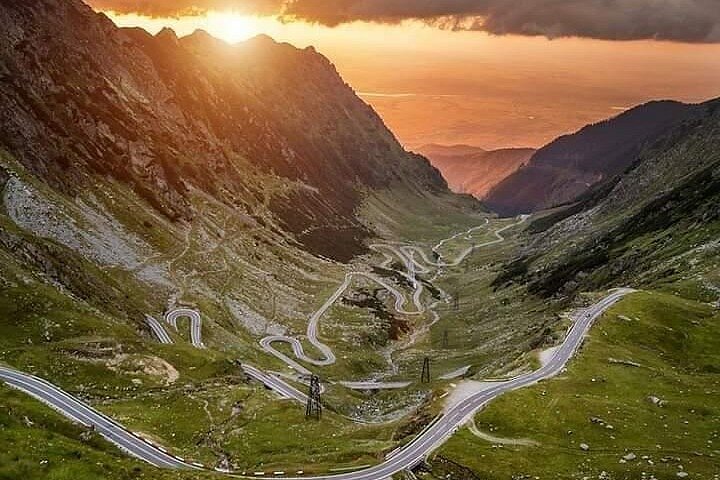
Driving through the Carpathians is both exhilarating and humbling. The Transfăgărășan Highway twists like a silver ribbon through mountains that seem to touch the sky. Waterfalls tumble beside the road, and every turn reveals a new vista more spectacular than the last.
At Balea Lake, I stopped to stretch my legs and found myself speechless before the mirror-like water reflecting the peaks. It’s the kind of place that silences you — not out of fear or awe, but gratitude.
As I continued westward, the scenery softened. Wooden churches rose from meadows, their tall spires pointing heavenward. Shepherds guided their flocks through green pastures, and time seemed irrelevant. I spent my last night in Maramureș, where folklore isn’t a museum piece — it’s a way of life.
Romania — A Journey That Stays With You
Traveling across Romania feels like turning the pages of a beautifully complex story — each region, each face, each landscape adding its own voice. From the buzz of Bucharest to the stillness of mountain villages, Romania is a place that speaks softly but leaves an echo.
What makes it special isn’t grand monuments or luxury resorts — it’s the sense of authenticity that runs through everything. You leave Romania not with a checklist of sights, but with memories that feel alive: laughter around a family table, the creak of a wooden gate, the hush of the mountains at dusk.
If you’re ready to discover a side of Europe that still feels untouched, Romania is waiting — patient, proud, and endlessly welcoming
